Source Manual Wooden Yoga Machine for Home Gym Fitness
Compare 30 manual wooden yoga machines from verified suppliers. These units support body fitness, core training, and balance exercises for home, gymnasium, and community use with customizable options.
Key considerations
Products List


Best Seller Yoga Studio Home Use Portable Stable Maple Wooden Yoga Machine Pilates Reformer
$1030.00 - $1100.00
MOQ: 1 Pieces


Maple Wood Pilates Reformer Exercise Machine for Home Fitness and Gym Use
$590.00 - $680.00
MOQ: 1 Pieces

Durable Eco-Friendly Multifunction Pilates Reformer Maple Wood Machine for Studio Use
$1220.00 - $1280.00
MOQ: 1 Sets

Factory Hot Sale Maple Wood Pilates Reformer Machine Wood Reformer Pilates Machine
$590.00 - $680.00
MOQ: 1 Pieces


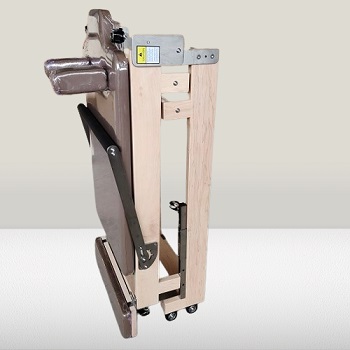


Eco-Friendly Pilates Reformer Yoga Machine for Health Fitness Equipment Gym
$634.06 - $760.87
MOQ: 1 Sets

Pilates Reformer Classical Design Machine Professional Yoga Reformer Pilates
$320.00 - $380.00
MOQ: 300 Pieces

$358.00 - $398.00
MOQ: 5 Pieces
Comprehensive Sourcing Guide
Sourcing Guide for Manual Wooden Yoga Machines
Understanding the Product Category and Core Specifications
The Manual Wooden Yoga Machine represents a specialized segment within the home fitness and commercial rehabilitation equipment market. Unlike motorized treadmills or electronic resistance machines, these units rely on gravity, user body weight, and manual tension systems to facilitate movement. The primary observation from current market listings indicates that these machines are predominantly designed for adult use in home environments, though they are also suitable for gymnasiums, parks, and community centers. The product name is frequently listed as "Pilates Machine" or "Yoga Machine," reflecting the dual functionality of core strengthening and flexibility training.
A critical aspect of sourcing this equipment is understanding the variability in physical dimensions. The market data reveals significant differences in product sizes depending on the specific model and intended use case. For instance, some units feature a product size of approximately 2400mm in length, with widths around 600mm to 710mm and heights varying from 300mm to 1980mm. Other configurations, such as those intended for compact storage, may have folded dimensions of 1350mm by 600mm by 460mm. The weight capacity is a vital specification for safety; observed data suggests a standard capacity of 125kg, with some robust models supporting up to 150kg. Buyers must verify the specific weight limits of the unit they are considering, as exceeding these limits can compromise structural integrity.
The material composition is another defining characteristic. The term "wooden" in the product description is accurate, with listings specifying "Customized Wood Material." This suggests that the primary frame is constructed from wood, which offers a distinct aesthetic and tactile experience compared to metal alternatives. However, the exact type of wood is not standardized across all listings and is often subject to customization based on the buyer's requirements. The color options observed are typically limited to standard industrial finishes like Black or White, which are chosen for their durability and ability to blend with various interior designs.
Compliance and Certification Verification
When sourcing manual wooden yoga machines, verifying compliance with international safety and environmental standards is non-negotiable. The market data indicates that reputable suppliers often provide specific certifications to demonstrate adherence to these standards. The most frequently observed certifications include CE, FCC, RoHS, and GS. The CE mark indicates conformity with health, safety, and environmental protection standards for products sold within the European Economic Area. The RoHS (Restriction of Hazardous Substances) certification ensures that the machine does not contain specific hazardous materials, which is crucial for both environmental compliance and user safety.
Additionally, some listings reference ISO standards, often appearing in conjunction with CE and RoHS as "CE, ISORoHS." While the specific ISO standard number is not always explicitly detailed in general product summaries, the presence of this notation suggests that the manufacturing process adheres to international quality management systems. The GS mark, a German safety certification, is another high-confidence indicator of rigorous testing and safety compliance. Buyers should request copies of these certificates directly from the supplier to ensure they are valid and applicable to the specific model being purchased.
It is important to note that while some listings mention "CE" as a standalone attribute, the more comprehensive packages include FCC and RoHS. The FCC certification is relevant if the machine includes any electronic components, such as digital displays. Indeed, the observed product attributes include an "English Display," which implies the presence of electronic interfaces. Therefore, verifying FCC compliance is essential for these specific models to ensure they do not emit excessive electromagnetic interference.
Cost Drivers and Pricing Structures
The pricing for manual wooden yoga machines is influenced by several factors, including material quality, customization levels, and packaging requirements. The observed price range in the market is broad, spanning from $4.6 to $1,320. This wide variance suggests that the market includes both entry-level components or accessories and fully assembled, high-end commercial units. The lower end of the spectrum may represent individual parts or simpler models, while the higher end likely corresponds to complete systems with advanced features, custom wood finishes, and extensive packaging.
The Minimum Order Quantity (MOQ) is another significant cost driver. The observed MOQ range is from 1 to 300 units. Buyers purchasing a single unit for personal use or small-scale testing will face different pricing dynamics compared to bulk purchasers. Bulk orders often benefit from economies of scale, potentially lowering the per-unit cost. However, the specific MOQ required by a supplier can vary based on the level of customization desired. For instance, requests for a "Customized Logo" or specific "Wood Material" may increase the MOQ threshold or incur additional setup fees.
Packaging also plays a role in the final cost. The data shows a mix of "Carton Packing" and "Wooden Box Packaging." Wooden boxes are generally more expensive and provide superior protection for heavy, delicate wooden machinery during international shipping. The weight of the packaging is also a factor; some units have a Gross Weight (G.W.) of 128kg and a Net Weight (N.W.) of 98kg, while others weigh up to 149kg gross. These weight differences directly impact shipping costs, which are a significant component of the total landed cost for international buyers.
Typical Applications and Functional Versatility
Manual wooden yoga machines are designed for a variety of applications, primarily focusing on body fitness, balance training, and core training. The product attributes explicitly list "Body Fitness" as a primary function, with specific suitability for "Balance Training" and "Core Training." This makes them ideal for rehabilitation centers, physical therapy clinics, and home gyms where low-impact, controlled movement is required.
The versatility of these machines is further enhanced by their suitability for different environments. While the primary application is listed as "Home," the data also indicates they are appropriate for "Gymnasium," "Park," and "Community" settings. This suggests that the construction is robust enough to withstand public use, provided the specific model is rated for such conditions. The "Unfolded" state of the product implies that these machines are designed to be set up for use and may require storage space when not in use. However, some models offer "Folded" capabilities, with specific folded dimensions provided, which is a valuable feature for space-constrained environments.
The target demographic is clearly defined as "Adult" and "Unisex," indicating that the machines are designed to accommodate a wide range of body types and fitness levels. The power source is consistently listed as "Manual," meaning the machine does not require electricity to operate, although the presence of an "English Display" suggests that some models may have electronic components for tracking metrics or providing guidance. This hybrid approach allows for a versatile user experience that combines traditional manual resistance with modern feedback mechanisms.
Supplier Evaluation and Origin Considerations
When evaluating suppliers for manual wooden yoga machines, the origin of the product is a key factor. The market data identifies "Qingdao" and "China" as the primary points of origin. Qingdao is a major port city in China known for its manufacturing capabilities and logistics infrastructure, which can facilitate efficient shipping. Buyers should verify the specific factory location to ensure it aligns with their logistical needs and to assess the supplier's capacity for meeting demand.
Supplier reliability can be gauged by their warranty offerings. The observed data includes warranty periods ranging from 3 years to 15 years for parts. A 15-year warranty on parts is a strong indicator of a supplier's confidence in the durability and quality of their product. However, buyers must carefully read the terms of the warranty to understand what is covered, such as structural components versus wear-and-tear items like straps or cushions.
Customization capabilities are another critical evaluation metric. The "Customization: Available" attribute appears frequently, along with options for "Customized Logo" and "Customized Wood Material." This suggests that suppliers are willing to tailor products to specific branding or design requirements. Buyers should inquire about the lead times associated with customization, as these processes can extend the production timeline. Additionally, the "Product Name" and "Product Model" fields (e.g., AFYG-01, MS-BB003, LH-B014) serve as unique identifiers. Buyers should ensure that the model number matches the specific features they require, as different models may have varying specifications regarding size, weight capacity, and packaging.
Quality Control and Long-Term Procurement Strategies
Quality control for manual wooden yoga machines should focus on structural integrity, material consistency, and finish durability. Given the use of wood, buyers should verify the type of wood used and the treatment process to ensure resistance to warping, cracking, or insect damage. The "Wooden Box Packaging" option observed in the data is a positive sign, as it indicates that the supplier understands the need for robust protection during transit. However, buyers should also inspect the internal packaging to ensure that the machine is securely fastened to prevent movement and potential damage.
Long-term procurement considerations include the availability of spare parts and the supplier's ability to provide technical support. The warranty periods mentioned, such as "15 Years Parts" or "3 Years Parts," highlight the importance of a reliable supply chain for replacement components. Buyers should establish a relationship with the supplier that includes clear communication channels for addressing any issues that arise post-purchase.
Furthermore, the standardization of the product is a factor to consider. While some listings provide specific standards like "0.58cbm" or "DIA: 39.5CM," these may refer to specific packaging or component dimensions rather than the entire machine. Buyers should request detailed technical drawings and specifications to ensure that the product meets their specific space and functional requirements. The "English Display" feature adds a layer of complexity, requiring verification that the interface is user-friendly and that the software or firmware is updatable if necessary.
In conclusion, sourcing manual wooden yoga machines requires a thorough understanding of the product's technical specifications, compliance requirements, and the supplier's capabilities. By carefully evaluating the factors discussed above, buyers can make informed decisions that align with their operational needs and quality standards. The broad range of options available in the market allows for significant flexibility, but it also necessitates a disciplined approach to verification and due diligence.
| Feature Category | Observed Specifications | Verification Requirement |
|---|---|---|
| Dimensions | Product Size: 2400600300mm to 24907101980mm | Confirm exact footprint and clearance needs |
| Weight Capacity | 125kg to 150kg | Verify load limits for intended user demographics |
| Certifications | CE, FCC, RoHS, GS, ISO | Request valid certificate copies for specific models |
| Packaging | Carton or Wooden Box (e.g., 1400700560mm) | Assess shipping costs and protection levels |
| Warranty | 3 Years to 15 Years (Parts) | Clarify coverage scope and claim procedures |
| Customization | Logo, Wood Material, Color | Confirm lead times and minimum order quantities |
| Origin | Qingdao, China | Verify factory location and logistics capabilities |
By adhering to these guidelines and maintaining a focus on evidence-based decision-making, buyers can successfully navigate the procurement process for manual wooden yoga machines, ensuring they acquire high-quality equipment that meets their specific requirements.
FAQs
What certifications do manual wooden yoga machines typically have?
These machines typically hold CE, FCC, RoHS, and GS certifications. Some models also include ISO standards alongside CE and RoHS to ensure safety and environmental compliance for international markets.
Can buyers request a customized logo on the machine?
Yes, customization is available for the product logo. Buyers can request specific branding, though this may affect the minimum order quantity and production lead time depending on the supplier.
What is the maximum weight capacity for these units?
The standard weight capacity is 125kg, with some robust models supporting up to 150kg. Buyers must verify the specific limit for each model to ensure structural safety during use.
How long is the warranty period for parts?
Warranty periods vary by model, ranging from 3 years to 15 years for parts. A longer warranty indicates higher confidence in the durability of the wooden frame and mechanical components.
Where are these manual wooden yoga machines manufactured?
The primary origin for these machines is Qingdao, China. Buyers should verify the specific factory location to ensure it aligns with their logistical needs and shipping requirements.
What packaging options are available for shipping?
Packaging options include carton packing and wooden box packaging. Wooden boxes provide superior protection for heavy machinery, though they increase the gross weight and shipping costs significantly.
Are these machines suitable for commercial gym use?
Yes, they are suitable for home, gymnasium, park, and community applications. The construction is robust enough for public use, provided the specific model is rated for such environments.